Answers to common questions on wet felting
What is wet felting?
Wet felting is the process of turning loose wool fibres into a solid piece of fabric using warm water, soap, and agitation. The combination of heat, moisture, and friction causes the tiny scales on the wool fibres to open, tangle, and lock together, creating durable felt fabric.
What is the difference between wet felting and needle felting?
Wet felting uses water, soap, and rolling to bind fibres together.
Needle felting relies on barbed needles to tangle fibres without water.
Both are popular felting techniques, but wet felting tends to create stronger, smoother fabric, while needle felting is ideal for sculpting details.
What wool is best for wet felting?
For beginners, Merino wool roving or wool tops are ideal because they felt quickly and evenly. Coarser fibres such as Jacob or Shetland wool can also be used for sturdier projects like rugs, slippers, or bags.
What does “roving” mean in felting?
Roving refers to long, combed strands of wool fibres that are ready for spinning or felting. In wet felting, roving (or tops) is pulled into smaller tufts and layered to build up your project.
Why does my felt turn out uneven?
Uneven felt usually happens when the wool layers weren’t spread thinly or evenly. To avoid this:
Use light, airy tufts of wool.
Lay fibres in alternating directions.
Check thickness before adding water.
If you already have uneven felt, you can patch thin areas with more wool and re-felt.
How much shrinkage happens in wet felting?
Shrinkage varies depending on the type of wool and how much agitation you use, but you can expect a reduction of 25–40%. Always start larger than the finished size you want.
Can you combine colours in wet felting?
Yes – blending colours is one of the joys of decorative felting. You can layer fibres for bold blocks of colour or mix wisps together for a marbled effect. For crisp patterns, handle gently at first so colours don’t bleed too much.
What if my felt has holes?
Holes form when fibres don’t overlap properly. To fix them, place a small tuft of wool over the hole, add warm soapy water, and re-felt until it bonds with the rest of the fabric.
How do I make 3D shapes with wet felting?
To create hollow or three-dimensional forms, use a resist – a flat template made from plastic or card. Lay wool over both sides, felt as usual, then cut the resist out once the wool has bonded. This method is great for making bowls, bags, or slippers.
Why is my felt weak or falling apart?
Weak felt usually means it wasn’t worked long enough. Increase the rolling and rubbing, and finish with a cold rinse to “shock” the fibres into tightening.
Is wet felting eco-friendly?
Yes – most wet felting uses natural wool fibres, water, and a little soap. It avoids synthetic materials and produces long-lasting items, making it a sustainable craft.
Wet Felting Workshops
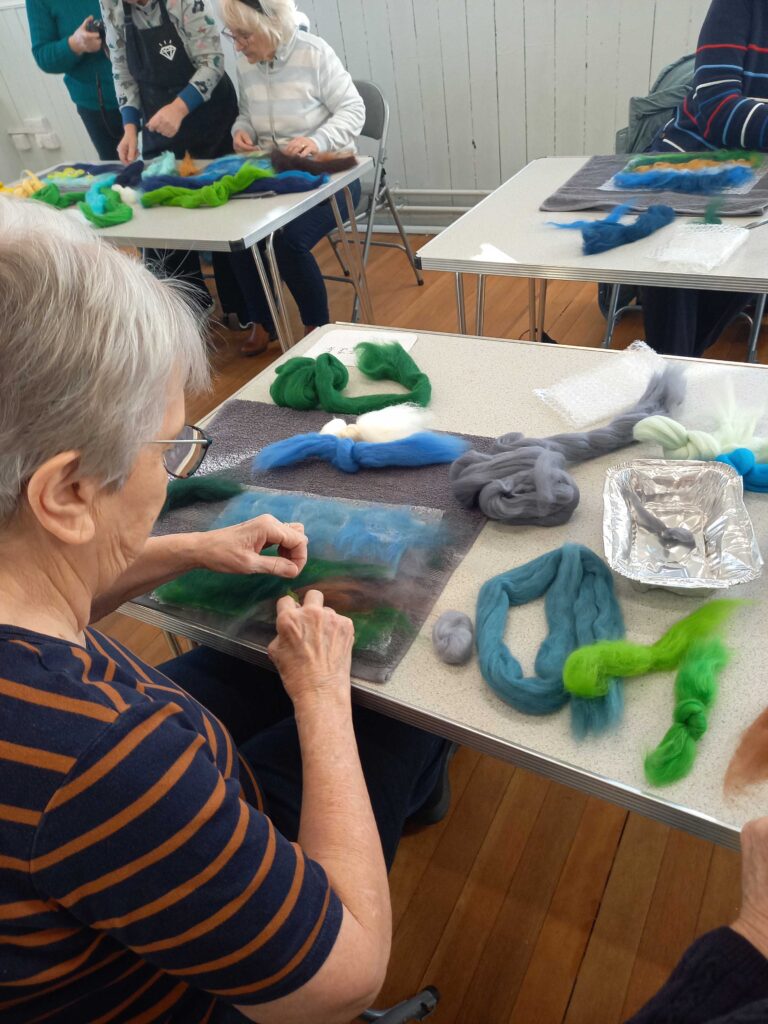
As well as creating felted items and kits, I also offer workshops throughout the year. For details visit my home site here: Wet Felting Workshops.